Selection Guide for Pneumatic Butterfly Valves in Industrial Automation: How to Match Pressure, Temperature and Media?
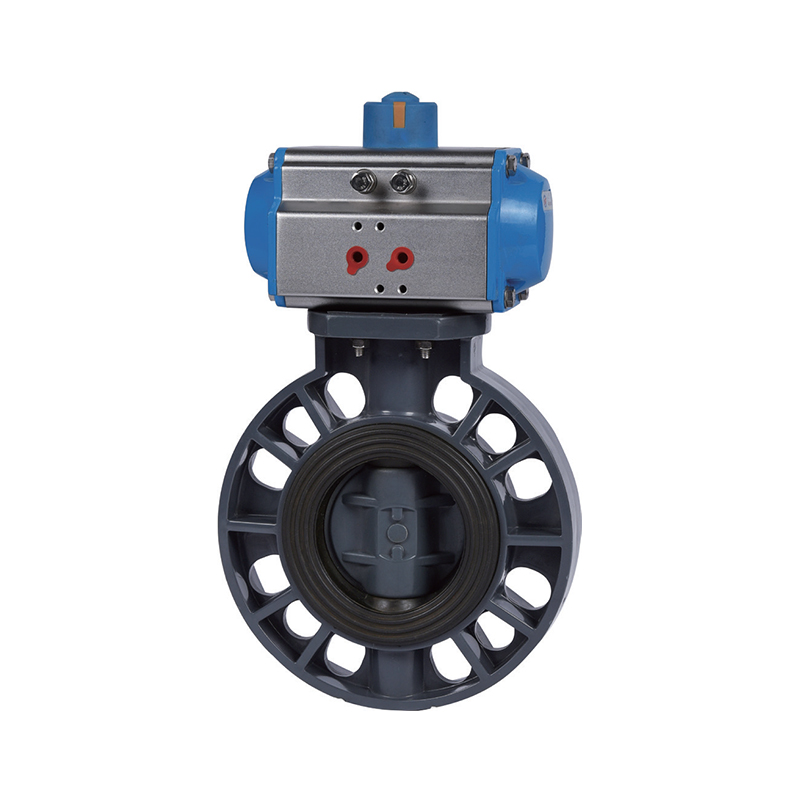
In industrial automation systems, pneumatic butterfly valves are widely used in multiple industries due to their fast response, compact structure and easy control. However, different industries have different requirements for valve pressure, temperature and media compatibility. Improper selection may lead to valve failure, leakage or shortened life. The following are key selection points for different industries:
1. Pressure level matching
Pneumatic butterfly valves need to select appropriate design pressures (such as PN10, PN16, ANSI 150, etc.) according to the system working pressure:
Photovoltaic, Electronic Semiconductor: Usually low pressure (PN6~PN10), used for ultrapure water or gas delivery.
Metallurgy, Nuclear Power: Medium and high pressure (PN16~PN40), need to resist impact pressure, especially high temperature and high pressure steam or corrosive fluids.
Industrial Wastewater, Drinking Water: Normal pressure to medium pressure (PN10~PN16), water hammer effect needs to be considered.
2. Temperature adaptability
The valve body material (such as cast iron, stainless steel, fluorine lining) and sealing material (EPDM, PTFE, NBR) need to match the medium temperature:
Medicine, semiconductor: low temperature or normal temperature (-20°C~120°C), sterile grade materials (such as 316L stainless steel PTFE seal) are required.
Metallurgy, nuclear energy: high temperature (200°C~500°C), metal hard seal or special alloy valve body is required.
Photovoltaic: may involve extreme temperature difference, and weather-resistant materials are required.
3. Medium compatibility
The corrosiveness and particulate content of the medium determine the valve material and sealing solution:
Drinking Water, Industrial Water Treatment: requires no pollution, and EPDM or FDA-certified sealing materials are selected.
Industrial wastewater: containing acid, alkali or solid particles, requires fluorine lining (PTFE) or wear-resistant rubber seal.
Electronic semiconductor: ultrapure water or high-purity gas, the inner wall of the valve needs to be electrolytically polished to avoid particle precipitation.
Nuclear energy: radioactive media require all-metal sealing valves with special certification (such as ASME N grade).
Industry application examples
Photovoltaic: low-pressure and room-temperature ultrapure water transportation, emphasizing zero leakage and long life.
Metallurgy: high temperature and high dust environment, valves need to be wear-resistant and anti-stuck.
Medicine: high sterility requirements, valves need to be easy to clean (CIP/SIP compatible).
Nuclear energy: under extreme working conditions, valves need to meet seismic and radiation protection standards.
 +86-15258772971
 dinys009@163.com